
How difficult could it be to make an onsen egg? The recipe requires 1 litre of boiling water, cooled down with 200ml of cold water, and four eggs to steep for 16 to 17 minutes. But, no matter how hard I try, I can’t beat those store-bought onsen eggs.
To me, the perfect onsen egg has a runny yolk, a soft-cooked white, and retains its shape once cracked. The store-bought onsen eggs tick all the boxes. However, when I make it, the yolk would solidify, the whites would run, and the whole thing would look weird. Still edible though.
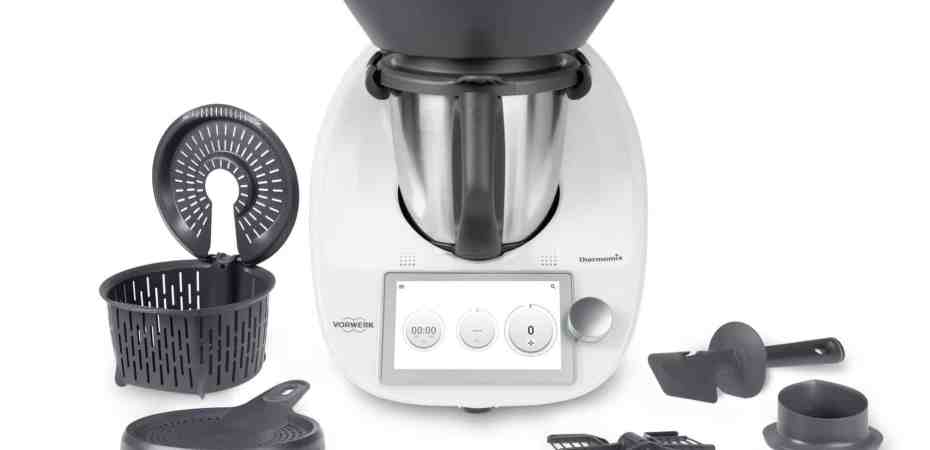
One day a big lorry pulled up at my house and delivered a big box. It was from my sister in Europe, and inside that box is a Thermomix, a TM6.
I’ve heard of those glorified convection ovens people call air fryers and I’ve heard of those electric pressure cookers people call instapot. However, it seems that I am the only person in my circle of friends who knows nothing about Thermomix. My friends told me that this kitchen appliance is known for two things: being expensive and is being sold through direct selling. Also, everyone they know who has one and used one swear by it.
After opening the box, the whole thing looks complicated. Two books accompanied the Thermomix, a thin user manual and a thick hardbound guidebook, neither helped me figure out what the appliance is.
The user manual is filled with technical stuff and has a handy chart of the myriad of accessories included in the box. The guide book is full of marketing spiel and full-page pictures of the foods you can make with the Thermomix but without the recipes.
The whole thing was confusing, but then came the needlessly complicated part.
To properly use the Thermomix TM6, you’ll have to connect it to the internet via WiFi and register with Cookidoo, their online recipe database service.
Then came the waves and waves of updates. It took a while before I started cooking. And there’s no app, it is all web-based or has to be done on the appliance’s touchscreen. That’s fine for tech-savvy folks, but this process could have been done much better.
To familiarise myself with the appliance, I used its many features one at a time and unlearn the idea that the Thermomix is a be-all and end-all appliance. I created my own tutorial.
I started by learning how the heater work by making tea and boiling eggs. Then I learned how the food processor, weighing scale, and the pre-clean option works by making mayonnaise and lemonade.
I gradually increased the complexity by making soy milk and soup.
Throughout the process, I noticed some quirks with the Thermomix TM6. Mostly usability stuff.
I can’t boil water, one of the simplest things to do, on the Thermomix, right from the main menu. Unless I want the food processor blades to work as well, I have to go into the kettle mode, which adds a few more steps.
The touchscreen is nice and all, but it is not as snappy as it should be, and once a splash of water or stain gets on it, it misbehaves. Having to wash off and dry my hands or wipe the screen every time I want to operate the touch screen is troublesome while cooking.
There is no ‘start’ button. Turn the knob on the rightmost setting on the screen and off it goes. Giving me no time to figure things out and limits my options.
For example, on the main screen, there are three settings: time, temperature, and speed. This means I cannot do a simple thing like boil water without setting the mixing blade to start the machine.
The Thermomix TM6 costs around RM7,000. Getting one from the official website is a bit troublesome because it requires booking a ‘cooking experience’. As if they know the current way they present the product is complicated.
On top of that, there is an annual 39USD subscription, if you want to use the Cookidoo service. Cookidoo is an attempt to turn the Thermomix into an appliance as a service. The subscription gives you access to recipes and step by step guided instructions on how to cook a dish using the Thermomix.
The appliance is still functional without it, but after paying so much for an appliance, an additional subscription for recipes just does not feel good. It doesn’t even have app support or smart home integration either.
The web interface makes it feel old and the exclusion of the actual recipes from the included book just makes the whole thing feel like a cash grab. On the upside, you do get a few months of membership for free by paring your account to the appliance for the first time.
Cleaning the appliance is easy. There is a pre-clean mode that uses 1 litre of water, a drop of soap, and the appliance’s own ability to blend and warm up to loosen up any residue. Then I just wash everything accept the base unit in the sink. If there are any splashes on the base unit, I just wipe it clean.
After almost a week playing with the Thermomix TM6, cooking recipes after recipes without fail, I was ready to experiment on my own. I wanted to make the perfect onsen egg.
I based the idea on the experiments other people have done by cooking eggs in sous vide.
But then I ran into another quirk of the Thermomix. Because the blades have to spin for the kettle to work, even in sous vide mode, anything I want to sous vides in there must fit into the relatively small simmering basket that isn’t even fully submerged under the two litres of water (maximum). In other words, the capacity is small. There is a blade guard that can theoretically remedy that but it’s not included and coasts an additional RM130.
5 eggs at 65-degrees and 40-minutes later, I got my onsen eggs. The yolk is thick, the whites cut like pudding, and it retains its shape. Perhaps at 75-degrees for 15 minutes could work too. But, that is an experiment for another time.
There are accessories that came with the Thermomix that I haven’t even used yet, like the Varoma steamer basket. I also haven’t tried to make pastries or deserts with the appliance. I would still need a pan for searing and an oven for baking, but it seems that the Thermomix TM6 can do everything else.
 Azizul Rahman Ismail