
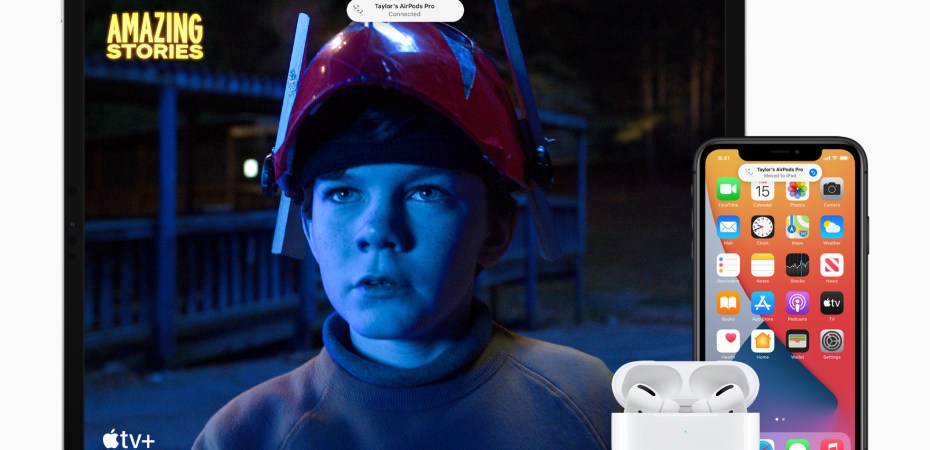
I was waiting in the car for a friend in the lower-level parking lot of one of those new-fangled building that put their lobby under the ground level. I had time to kill so I popped on the AirPods Air and launched Apple TV on the iPhone. I picked an episode of See and started watching.
The show sounded excellent. Apple TV+ shows seems to not only look great but sounds great as well. I looked around. Perhaps its because I’m in a car, in a basement parking lot, isolated from ambient noise and in an enclosed space that the speakers from the iPhone sounded so good.
I continued to watch the show through the large gap between the spokes of the steering wheel. The iPhone was propped up on the dashboard, leaning against the plastic screen that covers the instrument panel. Maybe it was the inset, the shape, and the curve of the panel that created the mini soundstage. It felt like I was a giant in a mini theatre, the console was the stage.
Then I remembered about Apple’s Spatial Audio. It works with AirPods Pro, which I have, and AirPods Max, which I don’t have. It also works with Apple TV, which we have in Malaysia; Disney+, which we don’t have; and Hulu, which we don’t have. I wanted to try it out.
I have Apple TV on, so I reached for the AirPods Pro, opened the case, and realised that I already have them on. I checked the setting and yes, Spatial Audio is on by default. And so was ANC.
I took out the AirPods Pro and listened to the show through the iPhone’s speakers. It sounded like it came from phone speakers.
I put on the AirPods Pro back on at it sounded like my iPhone has the best speakers on a smartphone ever.
The difference was stark.
But it all made sense. When Apple first talked about the technology, they touted features like head tracking and sound staging that creates an audio version of virtual reality. It worked as advertised.
However, currently, the selection of compatible app and hardware are limited. And, the ideal use case for this technology, travel, is currently not viable for most people thanks to the pandemic.
The technology is novel and works well, but it will need more support, especially from streaming services and games, for the feature to be a reason to invest in compatible hardware.
 Azizul Rahman Ismail