
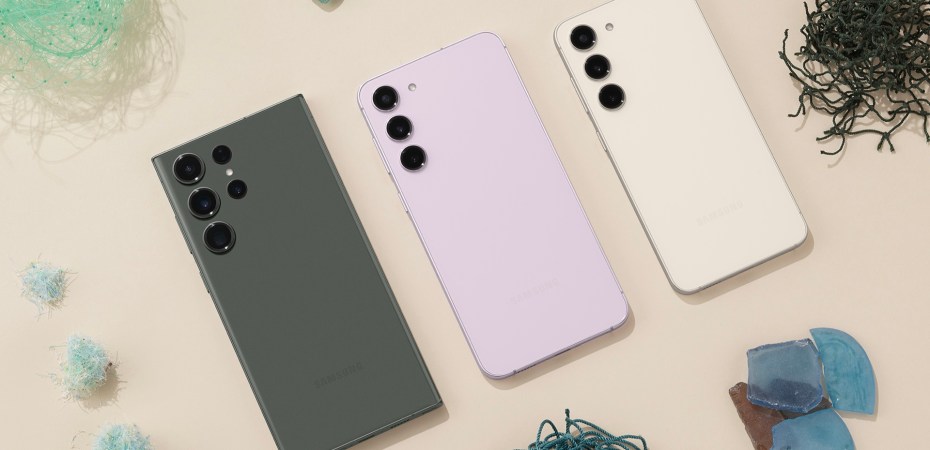
Of all the Android phone makers out there, Samsung is one of the only four that I would trust and consider buying. But, ever since they introduced the flip and the fold, the lustre of the S series devices began to fade.
There are three devices in the Samsung Galaxy S23 series: the S23, S23+, and the S23 Ultra. The specifications on all three are not exciting, two of them look like an iPhone, and the Ultra should be called the Note.
You can compare all three devices here: https://www.samsung.com/my/smartphones/galaxy-s23/compare/
To be fair, the S23 Ultra stands apart from the pack. It still looks like a Note, which is unique, and when compared to the other devices in the series, it has the biggest display, the best display, the biggest battery, and even the biggest RAM. All while still having that built-in stylus.
The camera doesn’t excite me. Every “flagship” China phone will have roughly the same set of features but under a different marketing name. Even the (up to) 10X optical zoom and (up to) 100x digital zoom is as practical as a gashapon, which is nice to have but not useful.
Sure the S23 Ultra boasts a 200MP sensor, but on a sensor that small and with optics that miniature, it is meaningless.
If a mobile photographer whats that many pixels with that much zoom, they should just pick up a mirrorless camera. Otherwise, embrace the point-and-shoot roots of mobile photography. Besides, at this point, we should realise that what differentiates a good mobile photo and an excellent mobile photo is the photography, not the camera.
Looking at the price, the Galaxy S23 starts at RM3,899, the S23+ at RM4,699, and the S23 Ultra at RM5,699. To put it in context, the price of an iPhone 14 starts at RM4,199, the iPhone 14 Plus starts at RM4,699, the iPhone Pro starts at RM5,299, and the iPhone Pro Max starts at RM5,799.
All that said, I still stand by my original statement. If I’m going to get an Android phone, a Samsung, and especially the Ultra, would be one of the devices I would consider. But, an iPhone would have no unwanted apps, more innovative privacy features, and a more mature ecosystem.
 Azizul Rahman Ismail